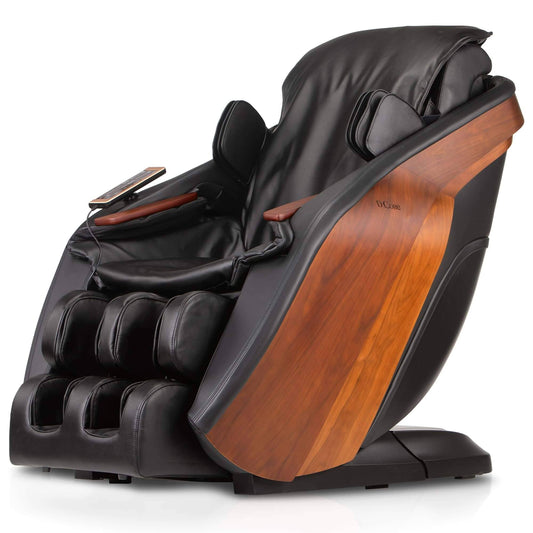

Massage Chair Pregnancy Safety: A Practical Guide
A premium massage chair can feel especially appealing when pregnancy brings tight hips, a sore lower back, and restless sleep. But massage chair pregnancy safety is not a feature-setting question alone. It is a medical and comfort decision that should begin with your OB-GYN, midwife, or prenatal care team - particularly before using a chair with deep tissue rollers, heat, compression, or zero gravity recline.
There is no universal trimester, program, or intensity level that makes every massage chair appropriate during pregnancy. Your health history, stage of pregnancy, symptoms, and the chair’s specific design all matter. For many expectant parents, the safest choice may be to wait. For others, a clinician may approve limited, gentle use with carefully selected settings.
Why massage chair pregnancy safety requires a personal answer
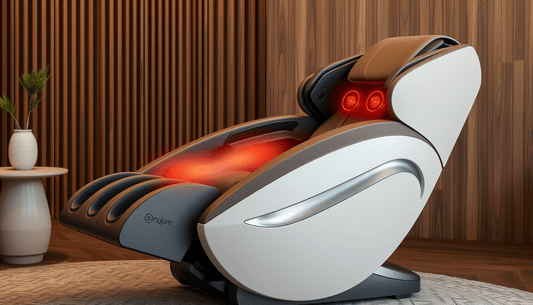
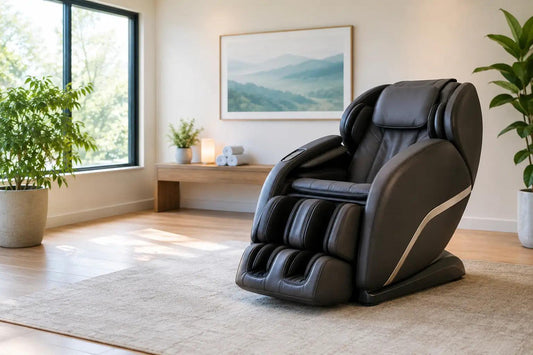
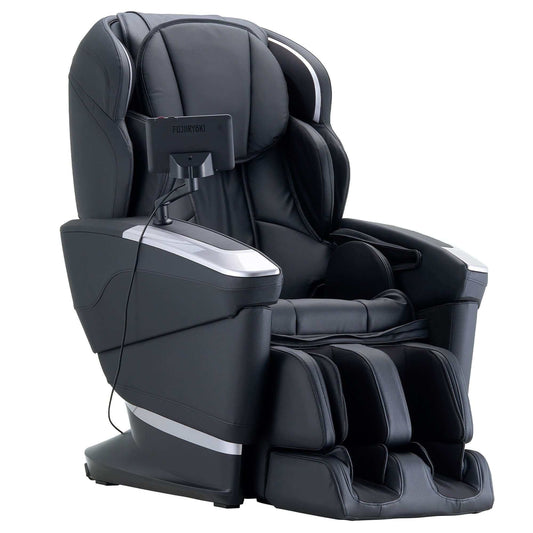
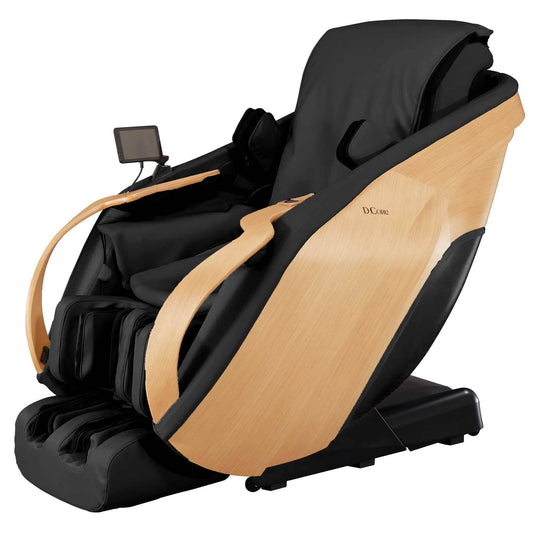
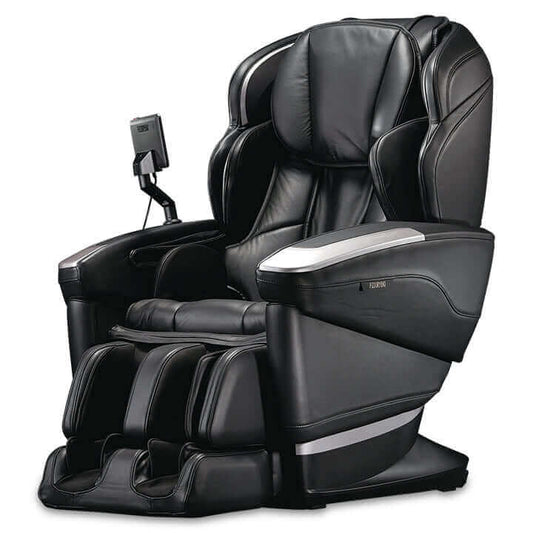
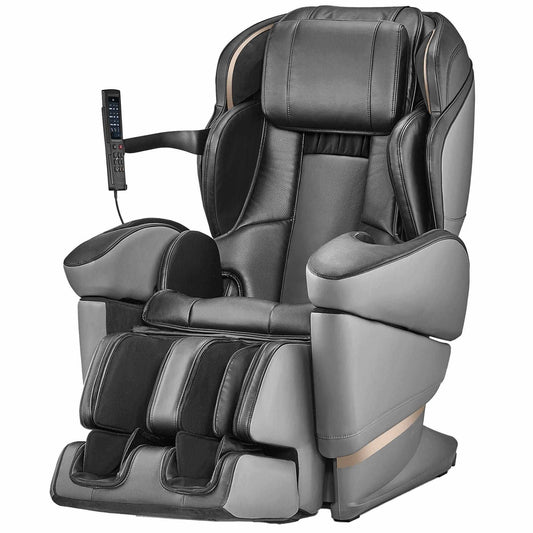
Massage chairs are not the same as a light shoulder massage from a partner or a prenatal massage delivered by a trained therapist. Advanced chairs can combine mechanical rollers, percussion, airbags, stretching programs, vibration, heat, and pronounced recline. Those capabilities are designed for deep relaxation and muscular recovery, but pregnancy changes how the body responds to pressure, positioning, temperature, and circulation.
Research on massage chair use specifically during pregnancy is limited. That lack of clear evidence is one reason many manufacturers list pregnancy as a precaution or contraindication in their owner’s manuals. Follow the guidance for the exact model you own, and treat a warning in the manual as a reason not to use the chair unless your prenatal clinician specifically advises otherwise.
The question is not whether massage chairs are inherently harmful. It is whether a particular chair, program, and body position are suitable for you at this point in pregnancy. A healthy pregnancy with a clinician’s approval calls for a different conversation than a pregnancy involving hypertension, bleeding, severe swelling, pelvic pain, a history of preterm labor, or clotting concerns.
The features that deserve the most caution
Deep rollers and strong pressure programs
A sophisticated SL-track or 4D massage system may deliver exceptional back coverage and adjustable intensity for a nonpregnant user. During pregnancy, however, strong kneading, tapping, rolling, or stretching can feel uncomfortable or overly forceful, especially around the low back, pelvis, hips, and abdomen.
Avoid any program that creates pressure across the abdomen or causes pain, cramping, dizziness, nausea, or a feeling of being compressed. Do not assume that a preset labeled “gentle” is automatically prenatal-friendly. The chair may still include movement or intensity that is unsuitable for your body.
Claims about specific acupressure points triggering labor are not supported by strong clinical evidence. Still, that uncertainty is not a reason to experiment with intense settings, particularly later in pregnancy or when there is any concern about contractions. Pregnancy is not the moment to test the limits of a deep-tissue program.
Heat therapy
Heated massage functions can be luxurious for ordinary muscle tension, but elevated body temperature is a meaningful pregnancy consideration. The concern is greater early in pregnancy and for users who are already warm, dehydrated, ill, or prone to feeling faint.
A chair’s localized heat may be mild, but the actual effect depends on temperature, duration, clothing, room conditions, and individual sensitivity. Ask your care team whether any heated feature is appropriate for you. Unless they give clear approval, leave heat turned off rather than treating it as a minor add-on.
Zero gravity and deep recline
Zero gravity positioning can reduce the sense of load through the back and legs. Yet later in pregnancy, spending time flat or significantly reclined on the back can be uncomfortable for some people because the growing uterus may place pressure on major blood vessels. That can contribute to lightheadedness, shortness of breath, nausea, or a racing heartbeat.
A chair does not have to be fully flat to create a problem. If your clinician permits chair use, a more upright position may be preferable, with a slow transition in and out of the chair. Never remain in a position that makes you feel unwell, and do not use an inversion-style stretch or an aggressive automatic recline without medical direction.
Air compression, leg massage, and vibration
Compression airbags, calf massage, and vibration are popular recovery features, but pregnancy can bring swelling, changes in circulation, varicose veins, and a higher risk of blood clots. These features are not a substitute for medical evaluation of leg pain or swelling.
Do not use a massage chair to self-treat one-sided swelling, redness, warmth, tenderness, sudden leg pain, chest pain, or shortness of breath. Those symptoms need prompt medical attention. Even routine ankle swelling should be discussed with your prenatal team before using strong leg compression.
When to avoid the chair completely
If your clinician has advised pelvic rest, activity restrictions, or avoiding massage, do not use the chair. The same applies if the manufacturer’s instructions identify pregnancy as a contraindication. A premium wellness chair should support a thoughtful routine, not override medical guidance.
Pause use and contact your prenatal care provider if you have bleeding, leaking fluid, contractions, significant abdominal or pelvic pain, severe headache, visual changes, sudden swelling, dizziness, or reduced fetal movement. These are not discomforts to work through with a different program or a lower setting.
Extra caution is appropriate if you have a high-risk pregnancy, high blood pressure or preeclampsia concerns, placenta previa, a history of preterm labor, clotting disorders, diabetes with complications, severe edema, or any unexplained pain. Your care team knows the details that a chair’s general safety label cannot account for.
If your prenatal team approves limited use
Approval should be specific enough to guide how you use the chair. Ask about timing, duration, heat, recline angle, leg compression, and acceptable massage areas. “Massage is okay” may refer to a prenatal therapist, not necessarily an advanced mechanical chair with a full menu of automated programs.
When a clinician does approve use, take the conservative route. Choose the lowest intensity, keep sessions brief, remain closer to upright, and skip heat unless it has been explicitly cleared. A back-only or upper-body setting may be more appropriate than a full-body routine, but follow your clinician’s recommendation rather than relying on a generic rule.
Use the chair when you are well hydrated and able to get out easily. Stop immediately if anything feels wrong. Comfort is not the only standard: a setting can feel pleasant and still be inappropriate for your circumstances.
It also helps to have another adult nearby the first time you use a chair after approval, especially if mobility is limited. Automatic programs can change position unexpectedly, and pregnancy can affect balance when standing after a reclined session.
Questions to bring to your prenatal appointment
A short, practical conversation can produce a safer answer than searching for a universal rule. Tell your clinician the chair has rollers, air compression, recline, and optional heat. Mention where you feel discomfort and whether you have swelling, varicose veins, blood pressure concerns, or prior pregnancy complications.
Ask whether gentle mechanical massage is suitable for you, whether heat should remain off, and how reclined you may be. Ask specifically about lower-back massage, hip and glute massage, calf compression, and session length. If the answer is uncertain, waiting is a sound decision.
Choose comfort without taking unnecessary risks
During pregnancy, the most advanced setting is not always the best setting. An ultra-premium chair may offer precision rollers, sophisticated body scanning, and deluxe zero gravity positioning, but those benefits are intended to be personalized to the user’s condition. Pregnancy deserves the same personalized approach.
Until your prenatal care team gives clear guidance, consider lower-risk comfort options such as changing positions, gentle clinician-approved stretching, a supportive pillow, a warm shower if permitted, or prenatal massage from a qualified professional. The goal is not to miss out on relaxation. It is to protect your comfort while giving your changing body the care it actually needs.
Etiquetas:
Anterior
Fujiiryoki Cyber Relax AI: Improve Sleep Quality and Lower Leg Fatigue with AI-Personalized Ankle-to-Wrist Massage (Deep Tissue, Shiatsu, Reflexology)
Próximo
Fujiiryoki Cyber Relax AI: AI-Driven Ankle-to-Wrist Massage for Fatigue Relief and Improved Circulation