
Executive Massage Chair for Office Buyers
A long meeting can leave the body carrying more than a full calendar. Tight shoulders, a stiff lower back, and mental fatigue often follow professionals from the desk to the end of the day. An executive massage chair for office use creates a private recovery space within the workday - one designed to support comfort, composure, and sustained performance without compromising the look of a refined workplace.
This is not simply a question of adding a comfortable seat to a corner office. A premium massage chair is sophisticated wellness equipment. The right model should complement the office environment, fit the available footprint, and deliver massage performance that feels genuinely restorative in the time between calls, projects, and appointments.
Why an Executive Massage Chair for Office Use Matters
For executives, business owners, and focused professionals, recovery has to be practical. A 15- or 20-minute session can be more realistic than leaving the building for an appointment, particularly during demanding weeks. An advanced chair makes that pause available on demand, whether it is used after a cross-country flight, before a presentation, or at the close of a long day at the desk.
The value is also cultural. In a private office, executive suite, or thoughtfully designed employee wellness room, a massage chair signals that comfort and performance belong in the same conversation. It can offer a quiet, premium amenity for leadership teams, clients, and professionals who spend extended hours seated.
That said, the best chair for a private office is not always the right choice for a shared workplace. Privacy, usage frequency, room access, and upholstery durability all matter. A high-performance chair with deeply personalized settings may suit one executive exceptionally well, while a commercial-grade model with simpler controls can make more sense for a multi-user relaxation space.
Start With the Office, Not the Feature List
A flagship chair can deliver impressive technology, but its dimensions determine whether it belongs in the room. Measure the placement area, nearby walkways, door clearance, and the space required when the chair reclines. Many premium models use space-saving wall clearance designs, allowing the chair to slide forward as it reclines. That feature can be especially valuable in an office where every square foot has a purpose.
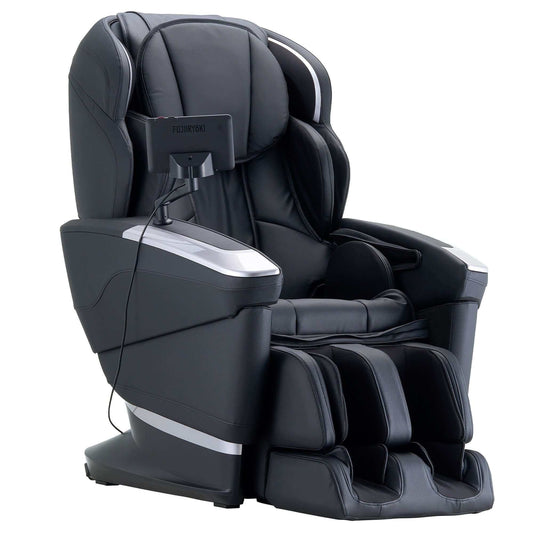
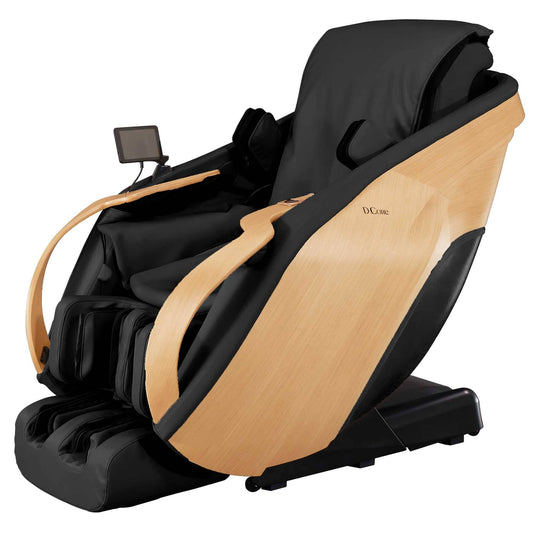
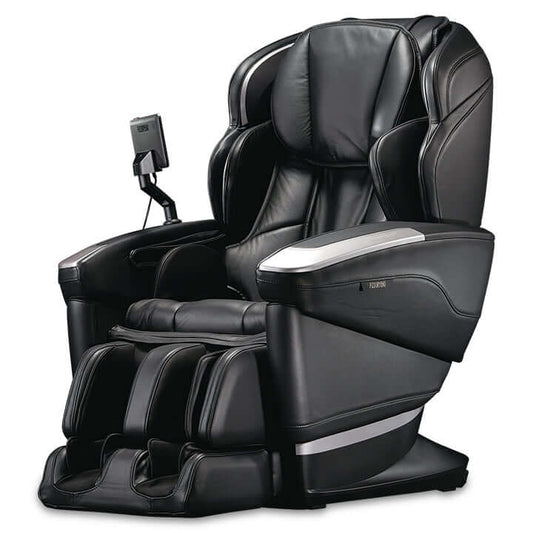
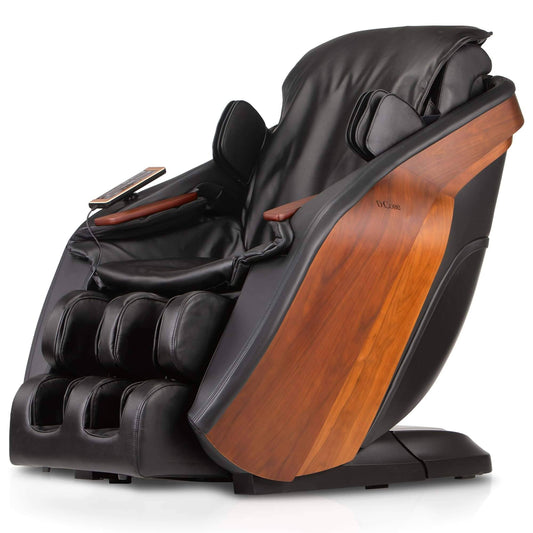
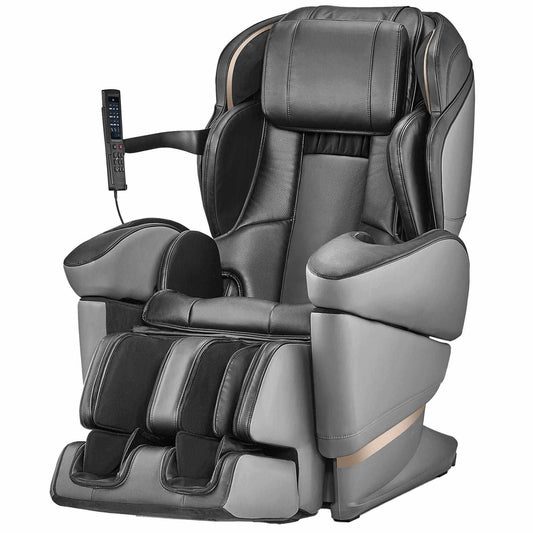
Consider how the chair will look when it is not in use. An executive environment typically calls for clean lines, tailored upholstery, and a finish that pairs naturally with wood, glass, leather, or modern architectural details. Black remains a classic option, but neutral tones can feel less imposing in a bright office or wellness lounge.
Noise deserves equal consideration. Massage chairs naturally use motors and air cells, but a quieter operating profile is preferable near calls, focused work, or reception areas. A dedicated wellness room gives greater flexibility. In a private office, choose a model whose operation supports a calm, discreet atmosphere.
The Massage Technology Worth Paying For
Premium chairs separate themselves through the quality and adaptability of the massage experience. Marketing terms can be useful, but they should be translated into how the chair will feel during regular use.
Roller Track and Body Coverage
An SL-track chair extends massage coverage from the upper back down through the lower back and into the glutes. For office users, this broad coverage is particularly compelling because prolonged sitting frequently concentrates tension along that entire chain. A shorter track may be suitable for a quick upper-body routine, but an SL track generally provides a more complete session.
Look for body scanning that measures shoulder position and body contours before the program begins. This helps place rollers more accurately for different users. It does not replace the need to adjust settings, but it creates a stronger starting point than a fixed-position massage system.
4D and 5D Performance
A 4D massage chair adds speed variation and depth control to the rollers, producing a more nuanced rhythm than a standard fixed-motion design. It can slow down over a tight area, vary intensity, and create a more convincing hand-like sensation. For a user who values deep tissue work after long hours at a desk, 4D is often a meaningful upgrade.
5D AI massage technology takes personalization further by assessing the body and adapting the session with more intelligent control. These systems are positioned at the leading edge of massage chair engineering and can be an excellent fit for buyers seeking the most advanced experience available. The trade-off is investment level. If the chair will be used once or twice daily by a single executive, the added precision may be well justified. For an occasional-use guest office, a well-built 3D or 4D model may offer better value.
Air Massage, Heat, and Stretch Programs
Rollers address the back, but air cells complete the experience. Shoulder, arm, hip, calf, and foot airbags can deliver compression and release patterns that help the body feel less compressed after stationary work. A full-body program should feel balanced rather than overly aggressive, particularly for users who prefer a restorative session before returning to work.
Heated massage functions add a welcome element of comfort through the lower back or leg areas. Stretch programs can also be valuable when a chair is used after hours of sitting. They gently reposition the body through controlled recline and air-cell support. As with any massage setting, intensity should be adjusted to personal comfort, especially for first-time users.
Zero Gravity Belongs in an Executive Setting
Zero gravity positioning raises the legs while reclining the upper body, creating a supported, weightless-feeling posture. It is one of the most important features to consider for an office chair because it changes the experience from a quick seated massage to a dedicated recovery session.
In this position, body weight is distributed more evenly across the chair, allowing the rollers to work with less pressure concentration. It can also make a 15-minute program feel notably more restorative than an upright massage alone. For professionals who spend much of the day in conventional task seating, the contrast is immediate.
The practical consideration is visual and spatial. A fully reclined chair should not interrupt circulation through the office. Place it away from active work zones and orient it toward a quieter visual field rather than a computer monitor, file cabinet, or busy doorway.
Controls Should Feel Premium, Not Complicated
An executive massage chair should offer range without demanding a manual every time someone sits down. A touchscreen remote can provide detailed control over massage style, roller location, air intensity, heat, and recline. Voice control may be useful when a user is already reclined, though it is best viewed as a convenience rather than the deciding feature.
Automatic programs are equally important. Look for clear options such as recovery, deep tissue, stretch, neck and shoulder, lower back, or relaxation. A chair that remembers preferred settings can be especially appealing in a private office. In a shared space, straightforward programs and easy reset functions are more useful than highly individualized complexity.
Choosing for a Private Office, Team Space, or Client Lounge
The intended user changes the buying criteria. A private executive office can support an ultra-premium model with advanced 4D or 5D AI performance, heated therapy, detailed customization, and luxury materials. The chair becomes part of a personal recovery ritual and a defining feature of the room.
For a team wellness room, prioritize durability, intuitive controls, easy entry and exit, and a broad range of comfortable automatic programs. The chair may serve people of different heights and preferences throughout the day. Commercial-grade construction can be the stronger long-term decision when usage is frequent.
A client lounge requires an additional layer of design restraint. Choose a chair that feels inviting but does not dominate the room. A refined exterior, quiet operation, and a short, approachable program selection will usually matter more than the most intensive deep tissue settings.
Make the Investment Match Daily Use
Premium massage chairs cover a wide investment range because their mechanical systems, materials, and feature sets vary substantially. It is tempting to compare chairs only by the number of programs or the newest technical label. A better question is how often the chair will be used and what kind of recovery the user actually prefers.
A buyer seeking occasional relaxation may be well served by an accessible premium model with zero gravity, an SL track, heat, and reliable automatic programs. A high-demand executive user may benefit from advanced roller control, deeper massage capability, enhanced body scanning, and Made in Japan craftsmanship. Refurbished premium inventory can also be an intelligent route for buyers who want elevated performance at a more attainable price point.
Fujiiryoki USA curates massage chair categories around these distinctions, from advanced zero gravity and SL-track designs to ultra-premium 4D, 5D, and executive editions. The goal is not to add technology for its own sake, but to find the chair that belongs in the way you work and recover.
Before finalizing a choice, confirm electrical access, delivery path, doorway dimensions, and where the chair will be used most often. A chair placed where it invites a real pause will deliver more value than an extraordinary model tucked into an inconvenient corner. Choose the one that makes recovery feel like a natural part of the workday, not another item on the schedule.
Tags:
Previous
Fujiiryoki Cyber Relax AI: A Complete Massage Techniques Tour
Next
Cyber Relax AI: Full-Body Massage from Ankle to Wrist