Massage Chair Buying Guide 2026
Buying a massage chair is a five-figure decision for a piece of furniture you'll likely use nearly every day for the next decade — so it deserves more than a spec sheet and a showroom demo. This guide walks through everything worth knowing before you buy: how to match a chair to your body and your goals, what actually separates a $1,300 chair from a $17,000 one, and how to read past marketing language to the engineering underneath it.
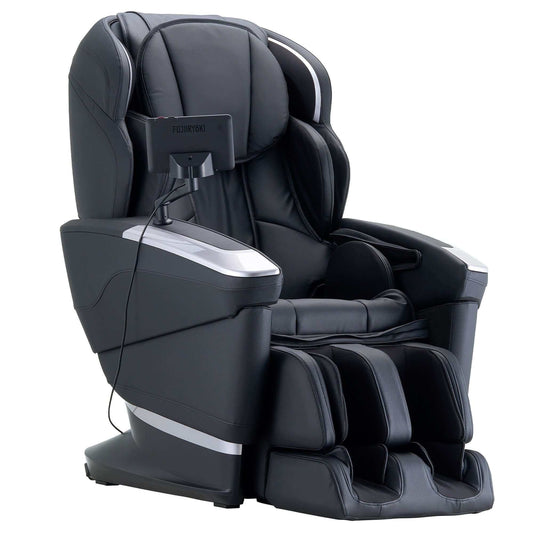
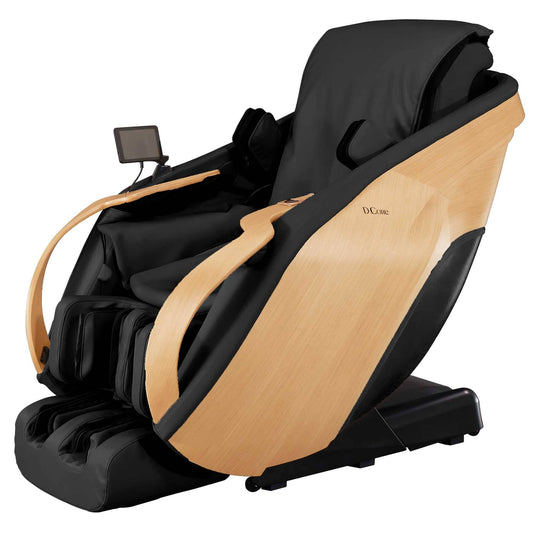
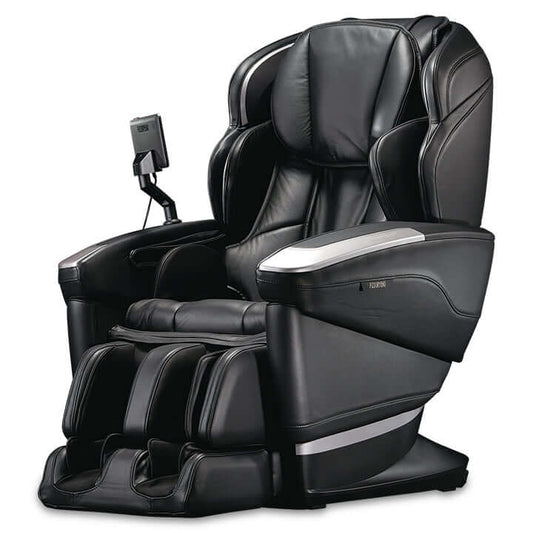
Every Fujiiryoki, Synca Wellness, D.Core, and Inner Balance chair is designed and manufactured in Japan by Fuji Medical Instruments Mfg. Co. — a company that's been building wellness technology since 1954. So along the way, we'll also show you exactly what that heritage means for the chair that ends up in your living room.
In this guide:
- What Makes a Massage Chair "Premium"
- The Decision Framework
- Roller & Track Technology, Explained
- Comparing Fujiiryoki, Synca Wellness, D.Core & Inner Balance
- The True Cost of Ownership
- Warranty & Lifespan Standards
- How to Buy: Trials, Financing & Delivery
- Glossary
- FAQ
1. What Makes a Massage Chair "Premium"
Premium isn't a price tag — it's an engineering standard. Cheap chairs and premium chairs can look similar in photos; the differences show up in the parts you can't see and the years you'll spend using them.
The five things that actually separate a premium chair from an entry-level one:
- Multi-motor roller systems capable of independent depth, speed, and rhythm control — not a single fixed-pattern motor running pre-programmed routines.
- Full-body coverage, from neck to glutes, often extending to calves and feet, rather than upper-back-only massage.
- Commercial-grade frames and motors built for years of daily cycling, not consumer-grade components rated for occasional use.
- Massage choreography developed by people who understand the human body — shiatsu practitioners, physical therapists, sports-recovery specialists — translated into mechanical movement, not just engineered by people who understand motors.
- Real customization, whether that's manual zone-by-zone control, app-based programs, or AI-driven real-time adjustment.
Every chair in the Fujiiryoki, Synca Wellness, D.Core, and Inner Balance lineup — from the CirC at $1,299 to the D.Core 2 at $16,999 — is built on this same engineering standard. The difference between tiers is depth of customization, coverage, and materials, not corners cut on the fundamentals.
A quick gut check when comparison shopping: if a listing leans heavily on marketing language ("revolutionary," "next-generation") without specifying track length, motor count, or roller mechanism, that's usually a sign the underlying engineering is unremarkable. Look for chairs whose sellers are specific about what's actually moving inside the chair.
2. The Decision Framework
The right chair depends on five things: what you need it for, how much space you have, how you like to control it, who else will use it, and your budget. Walk through these in order — they narrow the field fast.
What's your primary use case?
| Goal | Look for | Fits well with |
|---|---|---|
| Daily stress relief | Gentle rhythmic programs, zero gravity, aromatherapy/heat extras | CirC series, Jin series |
| Athletic / post-workout recovery | Deep tissue settings, stretching programs, targeted muscle relief, dual-zone massage | Cyber Relax Pro, D.Core series |
| Chronic pain management | Full-body scanning, heat therapy, independently adjustable intensity zones | Cyber Relax Ai, D.Core 2 |
| General daily wellness routine | Customizable profiles, intuitive controls, consistent everyday comfort | Calm Plus, CirC+ |
How much space do you have?
Premium chairs are substantial furniture. Measure your space and, critically, account for full recline clearance — zero gravity chairs need room to extend, and not all models recline the same way. Some newer designs use space-saving mechanisms that slide the chair forward rather than backward as it reclines, which matters a lot in smaller rooms.
- Compact room: favor smaller-footprint models like the CirC series
- Standard living room: most mid-tier chairs fit comfortably with 3-4 feet of clearance behind
- Dedicated wellness room: full flexibility — this is where the larger Cyber Relax and D.Core chairs shine
How do you want to control it?
- Simple remote users: look for chairs with clearly labeled, intuitive remotes and straightforward preset programs
- App-driven customization: favor models with companion apps for saving sessions and adjusting settings remotely
- AI-automated: the Cyber Relax Ai line uses real-time body scanning to adjust technique mid-session automatically, which is worth the upgrade if you don't want to think about settings at all
Who's using it?
- Single user: you can optimize entirely around one body type and one set of goals
- Multi-user household, similar builds: most mid-tier chairs handle this fine with adjustable settings
- Multi-user household, varied builds: prioritize chairs with multiple saved user profiles and a wider range of body-scan accommodation — this matters more than people expect, since a chair calibrated for one body can feel noticeably off for another
What's your budget?
| Budget | Consider | Why |
|---|---|---|
| $1,000–2,500 | CirC MR320 / CirC+ | Compact, SL-Track, heated rollers, strong entry point |
| $2,500–6,000 | Calm Plus, Jin series | Broader coverage, more program depth |
| $6,000–12,000 | Cyber Relax Ai JP-4000, Cyber Relax Pro MR8000 | 5D AI massage or dual-robot 4D, medical-grade targeting |
| $12,000+ | D.Core 2 | Heirloom-grade materials, maximum customization |
3. Roller & Track Technology, Explained
This is where marketing language gets the murkiest, so it's worth understanding the actual mechanics.
3D vs. 4D vs. 5D Rollers
- 3D rollers add depth control — they can extend further into or retract from muscle tissue, on top of the standard up/down and side-to-side motion. This is what allows a chair to reach deeper into tight muscle.
- 4D rollers build on 3D movement by adding variable speed and rhythm. This is the difference between a massage that feels mechanically repetitive and one that feels more like a human hand — speeding up, slowing down, varying pressure the way a real massage therapist would.
- 5D / AI-guided massage (used in our Cyber Relax Ai line) adds real-time sensor feedback — the chair reads muscle tension as it works and adjusts technique mid-session, rather than running a fixed program from start to finish.
The number matters less than the execution. A well-engineered 3D system with quality motors and a well-designed track can outperform a poorly built 4D system. When comparing chairs, ask about roller hardware and track design specifically, not just the "D" number on the box.
Track Systems: S-Track vs. L-Track vs. SL-Track vs. Flex-Track
- S-Track follows the natural S-curve of the spine, focused on neck-to-lumbar coverage.
- L-Track extends coverage further down, from the neck through the glutes and upper hamstrings.
- SL-Track combines both — spinal contouring plus extended lower-body reach — and is the most common track system in our mid-to-premium lineup.
- Flex-Track allows the track itself to flex and adapt to individual body shapes rather than following one fixed path, which matters most for households with varied body types.
Zero Gravity, Explained
Zero gravity recline elevates your legs above your heart, distributing your body weight evenly across the chair and reducing pressure on your spine — the same principle used in astronaut launch positioning, which is where the term originates. It reduces spinal compression during a massage session and can noticeably change how deep a massage feels, since your muscles aren't fighting gravity to stay tense.
4. Comparing Fujiiryoki, Synca Wellness, D.Core & Inner Balance
(Populate this table with your current live SKUs, prices, track systems, and standout features. Suggested columns below — fill with accurate current specs before publishing.)
| Model | Brand | Price | Track | Rollers | Best for |
|---|---|---|---|---|---|
| CirC MR320 | Fujiiryoki | $1,299 | SL-Track | 3D | Compact daily relief |
| Calm Plus | Synca Wellness | $4,199.99 | Flex Frame SL-Track | 4D quad roller | Full-recline flexibility, calf/lumbar heat therapy |
| Cyber Relax Ai JP-4000 | Fujiiryoki | $10,999.99 | SL-Track | 5D AI | Full-body AI recovery |
| Cyber Relax Pro MR8000 | Fujiiryoki | $10,999.99 | Flex SL-Track | 4D dual robot | Athletic recovery |
| D.Core 2 | D.Core | $16,999 | SL-Track | 3D Shiatsu | Maximum durability, heirloom quality |
5. The True Cost of Ownership
A single one-hour professional massage runs $80-150 in most U.S. cities. At even one session a week, that's $4,000-$7,800 a year — before tips, before cancellations, before the round trip. A premium massage chair is a one-time cost that typically pays for itself within 12-18 months of regular use, and keeps paying for itself for a decade or more after that.
The math, by usage pattern:
| Usage frequency | Annual spa-equivalent cost | Chair cost-per-use (10-year lifespan) |
|---|---|---|
| Daily, 20-30 min | Would cost $20,000+/year via professional therapy | Pennies per session |
| 3x/week | $12,000-18,000/year equivalent | Under $1/session |
| Weekly | $4,000-7,800/year | A few dollars/session |
Operating costs are minimal. Most premium chairs run 200-300 watts during use, which works out to roughly $20-40/year in electricity for daily 20-30 minute sessions. Professional servicing, when needed at all, typically totals $50-150 across the full life of the chair.
6. Warranty & Lifespan Standards
A massage chair is a mechanical product under real physical load, every day, for years — so its warranty is a direct statement of how long the manufacturer actually expects it to last, not just fine print.
What drives lifespan:
- Frame material — steel or aluminum frames hold up to 10-20 years of daily cycling; lower-grade composite frames typically don't.
- Motor grade — commercial-cycle-rated motors are built for daily use over a decade; consumer-grade motors are rated for occasional use and wear faster.
- Upholstery quality — genuine or high-grade synthetic leather holds up to years of contact and cleaning without cracking.
When comparing warranties on any chair — ours or a competitor's — watch for:
- Parts-and-labor coverage under 3 years (a red flag on a premium purchase)
- Vague language about what "structural" coverage actually includes
- Warranties that don't separate motor/electronics coverage from frame coverage
- No clear claims process listed anywhere on the site
Properly maintained, Fujiiryoki, Synca Wellness, D.Core, and Inner Balance chairs are built for 10-20 years of regular use.
7. How to Buy: Trials, Financing & Delivery
In-home trial: Test the chair in your actual space, not just a showroom, whenever possible — zero gravity recline and roller reach both feel different once you're sitting in your own posture on your own floor.
Financing: 0% APR financing options are available on most models — see our [financing page] for current terms.
HSA/FSA eligibility: Some chairs may qualify as an HSA/FSA-eligible expense with a Letter of Medical Necessity. See our [HSA/FSA eligibility page] for details.
Delivery: Choose between curbside delivery and white glove service, which includes full in-home setup and assembly. For chairs over 200 lbs, white glove is worth the added cost simply for logistics — most owners aren't set up to safely move and assemble a premium chair alone.
The first 30 days: Treat the first month as a calibration period. Explore every program, adjust intensity zones, and find your actual routine before deciding a setting "doesn't work" — most chairs have far more depth of customization than the default programs reveal.
8. Glossary
3D Rollers — Massage rollers that add depth control (in/out movement) to standard up/down and side-to-side motion.
4D Rollers — 3D roller movement plus variable speed and rhythm, for a more human-feeling massage.
5D / AI Massage — Real-time, sensor-driven adjustment of massage technique based on the user's body, used in the Cyber Relax Ai line.
S-Track — A roller track following the spine's natural curve from neck to lower back.
L-Track — Extends massage coverage from the neck through the glutes and upper hamstrings.
SL-Track — Combines S-Track spinal contouring with L-Track's extended reach.
Flex-Track — A track design that flexes to adapt to individual body shapes.
Zero Gravity — A recline position elevating the legs above the heart, reducing spinal compression.
Shiatsu — A traditional Japanese pressure-point massage technique informing our roller choreography.
White Glove Delivery — Delivery including full in-home setup and assembly.
Air Cells — Inflatable compression pads (arms, calves, feet, hips) providing rhythmic pressure alongside roller massage.
9. Frequently Asked Questions
What makes a massage chair worth $10,000+ compared to a $1,500 model? Commercial-grade motors built for daily use over 10+ years, more advanced roller systems with true multi-dimensional control, premium materials that hold up over time, and deeper customization — AI-guided targeting, more track coverage, independently adjustable zones.
How long do premium massage chairs actually last? With proper care, 10-20 years is a realistic expectation for a well-built chair — compared to 2-3 years for many budget models.
Do I need app or AI control, or is manual enough? It depends on how much you want to think about it. Manual control works well if you know your preferences and want direct adjustment. App and AI control are worth it if you want the chair to adapt without manual reprogramming every session.
Should I buy online or visit a showroom first? If you can, test in person — zero gravity recline and roller reach both feel different depending on your body. That said, identical models are sometimes available online at better prices through promotions, so comparing both channels is worth the extra step.
What's the difference between S-Track, L-Track, and SL-Track? S-Track follows spinal curvature from neck to lower back. L-Track extends further down to the glutes and hamstrings. SL-Track combines both for the most complete coverage.
How much does it cost to run a massage chair? Roughly $20-40 per year in electricity for daily 20-30 minute sessions, plus occasional servicing that typically totals $50-150 over the chair's lifetime.