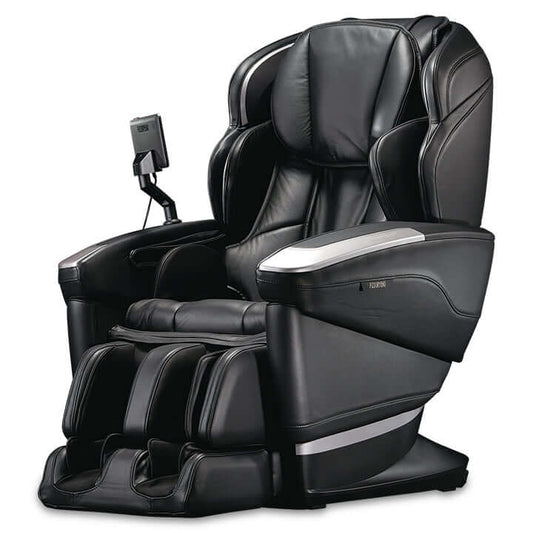
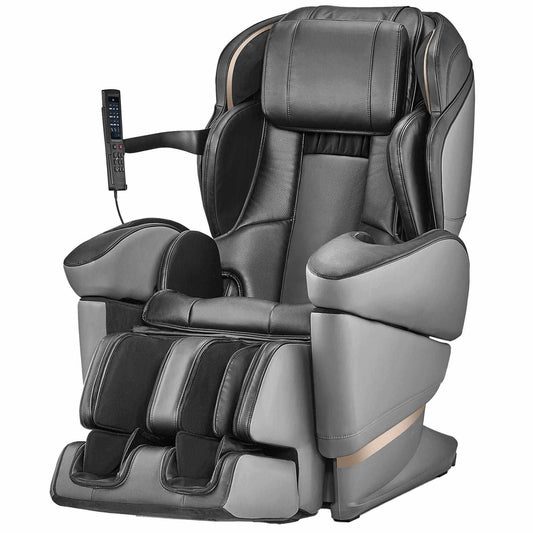
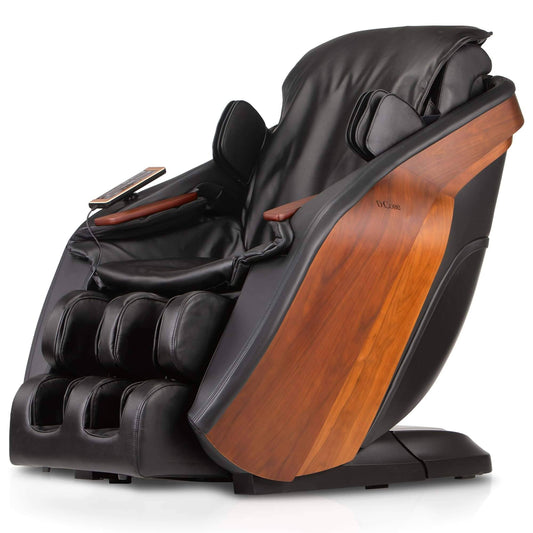

SL Track vs S Track: Which Chair Fits You?
A massage chair can have impressive 4D rollers, heat therapy, zero gravity recline, and intelligent body scanning, yet its track design still determines where the massage can travel. In the SL track vs S track decision, the difference is simple in principle: an S track follows the natural curve of your spine, while an SL track extends that contoured path from the neck through the glutes and upper hamstrings.
For buyers investing in premium wellness seating, that added travel can make a meaningful difference. It is not automatically the best choice for every body type or every recovery goal, but it is one of the clearest ways to distinguish a chair built for focused back care from one designed for more complete posterior-body coverage.
SL Track vs S Track: The Core Difference
An S track is shaped like the letter S when viewed from the side. The roller rail moves from the upper back into the lumbar region while following the spine’s natural inward and outward curves. This contour helps keep massage rollers close to the body rather than forcing a flat, generic path across the back.
An SL track begins with that same spinal contour, then continues lower under the seat. The rail typically reaches into the glutes and, depending on the chair’s engineering and recline position, may extend toward the upper hamstrings. The “L” refers to this extended lower section, not a sharp bend in the massage path.
The practical distinction is coverage. A premium S track chair prioritizes the neck, shoulders, thoracic back, and lumbar area. An SL track chair adds targeted work where many people carry tension after long hours of sitting: the hips, glutes, and upper back of the thighs.
Neither track should be judged in isolation. Roller quality, body scanning, chair fit, massage programming, air compression, foot massage, and recline geometry all influence the final experience. Still, track length establishes the foundation for what a roller massage can physically reach.
What an S Track Does Best
An S track remains a sophisticated choice for people whose primary concern is upper-body tension. Its curved rail supports consistent roller contact across the shoulder blades and lumbar area, where a straight track can lose contact as the spine changes shape.
This makes the design particularly appealing for professionals managing desk-related tightness, drivers, and anyone who wants a concentrated neck-to-lower-back massage. When paired with advanced 3D or 4D rollers, an S track can provide highly nuanced pressure along the muscles beside the spine. Stronger roller projection may also feel more direct because the chair is not trying to divide its mechanical focus across an extended lower-body path.
An S track can be the better fit when a compact chair footprint matters. While dimensions vary by model, chairs with shorter tracks may require less space and can be easier to place in an office, bedroom, or refined living area. That can be especially valuable in an executive office where daily shoulder and lumbar relief matters more than a glute-focused program.
There is also a value consideration. A well-engineered S track massage chair may deliver exceptional back massage performance without the added complexity and cost associated with longer-track architecture. For a buyer who rarely wants glute massage, paying for additional roller travel may not improve the ownership experience.
Why SL Tracks Appeal to Full-Body Recovery Buyers
SL track chairs are designed for a broader recovery routine. After the rollers address the neck and back, they can continue into the gluteal muscles, an area that receives less attention from conventional massage chairs. This is a notable benefit for people who sit for extended periods, train regularly, travel often, or feel persistent tightness around the hips.
The added lower-track coverage can also make a session feel more continuous. Instead of ending at the lumbar region, programs can work down the back and into the seat area with kneading, tapping, rolling, or deeper 3D and 4D techniques. In an ultra-premium chair, that progression can be complemented by calf compression, reflexology foot rollers, stretch programs, and heated zones for a more complete recovery experience.
However, an SL track does not necessarily mean stronger massage. Pressure depends on roller mechanism, depth adjustment, body scanning accuracy, and the chair’s ability to maintain contact with your frame. A top-tier S track chair with excellent 4D rollers may provide more satisfying upper-back precision than an entry-level SL track chair with limited adjustment.
SL tracks also vary considerably in length. Marketing may describe a long “SL track,” but the usable massage range depends on seat design, recline angle, and how the rollers interact with the user’s body. Buyers should look beyond the label and consider whether the chair specifically offers glute, hip, or upper-hamstring massage in its programs.
Coverage Is Not the Same as Fit
The most advanced track cannot compensate for a chair that does not suit your height, shoulder width, or preferred massage intensity. A taller user may appreciate a longer roller rail, but they should also confirm neck pillow position, shoulder detection range, leg-rest extension, and calf compartment fit. A shorter user should look for reliable body scanning and adjustable intensity so the rollers do not work too high or too low.
This is where body scanning becomes essential. Advanced sensors map the user’s shoulder position and back shape, then set roller travel around those measurements. Better systems make either track style feel more personalized, particularly when multiple people in a household use the same chair.
Recline position matters as well. In zero gravity, body weight is distributed more evenly, which can reduce pressure through the spine and allow rollers to maintain closer contact. On an SL track chair, recline can enhance access to the glutes and lower back. Yet some buyers prefer a more upright session for focused shoulder work, and a quality S track can excel in that setting.
Track Design and Massage Technology
Track architecture answers where the rollers travel. Massage technology answers how they work once they arrive.
A 2D chair moves rollers up and down and side to side. A 3D chair adds forward projection for greater depth. A 4D system combines depth adjustment with changes in speed and rhythm, creating a more lifelike pacing. Some advanced AI-driven systems further adapt massage patterns based on body data and user feedback.
For this reason, comparing an S track to an SL track without considering roller technology can be misleading. An S track with precision 4D rollers, refined shoulder kneading, deep lumbar work, and a strong stretch program can be an excellent luxury investment. An SL track with similar technology offers that high-end spinal massage plus more extensive glute coverage.
Air cells also play an important supporting role. On many SL track models, hip and seat airbags can compress and stabilize the pelvis while rollers work the glutes. This combination may feel more encompassing than rollers alone. If hip tension is a central concern, evaluate both the track and the chair’s air massage zones.
Who Should Choose an S Track Massage Chair?
Choose an S track chair when your wellness priorities center on the neck, shoulders, and lower back, and when you value precise spinal contouring over extended seat massage. It is a compelling option for users who want a more compact profile, have limited placement space, or prefer to direct more of their budget toward premium roller performance, heat, and ergonomic recline.
An S track also makes sense for buyers who already receive lower-body recovery through exercise, stretching, or other wellness routines. If you do not enjoy glute massage, an SL track’s primary advantage may be unnecessary.
Who Should Choose an SL Track Massage Chair?
Choose an SL track chair if your body regularly feels tight from the lower back through the hips and glutes. It is often the more versatile choice for active adults, frequent travelers, people with sedentary work routines, and households where users want a broader full-body program.
For a luxury home wellness space, an SL track pairs naturally with zero gravity, heat, foot rollers, and advanced 4D or 5D AI massage. The result is not merely a longer massage path. It is a chair designed to support a more comprehensive daily reset.
At Fujiiryoki USA, the most worthwhile choice is the chair that aligns track coverage with the way you actually recover. Consider where tension starts, which areas you want rollers to reach, who will use the chair, and how much room you have to enjoy it. A properly matched massage chair becomes less of an occasional indulgence and more of a dependable part of your everyday wellness routine.
Tags:
Previous
Cyber Relax AI: Seven Massage Techniques for Full-Body Home Relief
Next
Cyber Relax AI Massage Chair: Complete Guide to Techniques and Benefits