
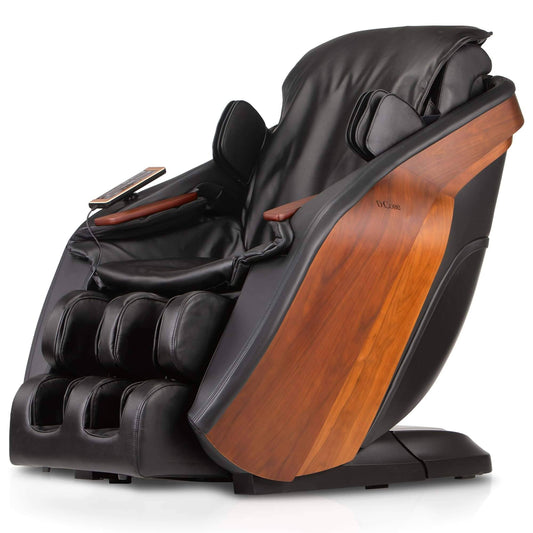

How to Choose a Massage Chair Under 5000
A massage chair under 5000 is no longer a basic vibration recliner with a few preset buttons. At this level, buyers can reasonably expect a full-body wellness chair with zero gravity positioning, focused back and leg massage, heat, and programs designed for everyday stress, post-workout fatigue, and long hours at a desk. The distinction is knowing which features improve the massage itself and which ones simply look impressive on a specification sheet.
For a serious at-home wellness purchase, $5,000 represents a meaningful threshold. It opens the door to better mechanics, more considered ergonomics, and a far more credible ownership experience than entry-level seating. It does not, however, automatically place every chair in the ultra-premium class. The best choice comes down to how well the chair's massage system suits your body, your routine, and the space where it will live.
What a Massage Chair Under 5000 Should Deliver
A chair in this category should feel like a purpose-built recovery system, not a novelty piece of furniture. Start with the core massage mechanism. Many strong options use 3D rollers, which move up and down the back, side to side, and outward toward the user. That outward adjustment matters because it determines whether the chair can provide a light, restorative session or a more deliberate deep-tissue feel through the shoulders and lower back.
A quality SL-track is another feature worth prioritizing. The track guides the rollers from the upper back through the lumbar area and toward the glutes. For professionals who spend the day seated, or for active users managing persistent hip and lower-back tightness, this extended coverage can be more valuable than an oversized menu of automatic programs. Track length alone is not the full story, though. Roller contour, speed control, and body scanning determine how naturally the massage follows your frame.
Zero gravity positioning also deserves attention. By raising the legs and reclining the body into a more balanced position, it can reduce pressure through the spine and improve the sensation of the massage. Some chairs offer a single zero gravity setting; others provide multiple recline positions. One is not inherently inadequate, but a broader range gives households more flexibility, particularly when users differ in height or preferred pressure.
At this price, look for effective air compression around the shoulders, arms, calves, and feet. Airbags should complement the rollers by holding the body in a stable position and delivering rhythmic compression, rather than creating a pinching or overly aggressive sensation. Foot massage is equally variable. Roller-based soles, calf compression, and adjustable ottomans can add real recovery value, while simple air-only foot compartments may feel less substantial for users who stand or train extensively.
Put Massage Performance Ahead of Feature Count
It is easy to be drawn to touchscreens, Bluetooth speakers, ambient lighting, or dozens of named programs. Those additions can improve the ownership experience, but they should not lead the purchase decision. A chair with fewer cosmetic extras and a better roller system will usually remain the more satisfying investment after the first month.
Focus first on adjustability. Can you independently set roller intensity, air compression, speed, width, and heat? Can the chair save a preferred routine or offer manual techniques such as kneading, tapping, rolling, and shiatsu? These controls allow one chair to serve a household with very different comfort thresholds.
Body scanning is another practical differentiator. Before a session begins, the chair measures shoulder position and body proportions to better place the rollers. No scan is perfect, especially for users at the far ends of a chair's recommended height range, but it is far better than a fixed-position massage. Check the stated user-height range and weight capacity closely. A premium-looking chair that does not fit the primary user properly cannot deliver premium results.
Heat should be viewed as a targeted comfort feature rather than a substitute for massage depth. Lumbar heat can make a session feel more restorative, particularly in the evening or after activity. Heated calves or feet can be welcome additions. Yet a chair with excellent back mechanics and modest heat often provides more value than one that advertises heat across multiple zones but offers limited roller adjustment.
3D, 4D, and AI: What the Labels Mean
Shoppers often encounter 3D, 4D, and AI massage terminology in this range. These labels can be helpful, provided they are considered in context.
A 3D chair adjusts roller depth, allowing a user to bring the massage closer to the body for greater pressure. This is the key capability for anyone who wants more than a gentle surface treatment. For many buyers under $5,000, a well-engineered 3D system is the sweet spot: capable, versatile, and designed for repeat use.
A 4D system typically adds variation in roller speed and rhythm, creating a less mechanical, more nuanced massage pattern. It can feel more sophisticated, especially during kneading and tapping sequences, but implementation matters more than the label. A thoughtfully tuned 3D chair may feel better than a poorly calibrated 4D model.
AI massage features generally use body data, user feedback, or sensors to tailor program selection and intensity. They can simplify the experience for a buyer who wants to sit down and begin a session with minimal adjustment. Still, do not assume AI eliminates the need for personal control. The strongest chairs combine intelligent automation with straightforward manual settings, so users can refine pressure when their body needs something different.
Consider the Room Before You Order
Massage chairs are substantial wellness furnishings. Measurements should be treated as seriously as massage specifications. Review the upright dimensions, the fully reclined footprint, doorway clearance, and the route from delivery point to the final room. A chair that fits beautifully on a product page may require more rear clearance than your office, bedroom, or media room can provide.
Space-saving wall-hugger designs are especially valuable in refined interiors where every inch matters. These chairs slide forward as they recline, allowing placement closer to a wall. The amount of required clearance varies, so compare the actual measurement rather than relying on the phrase alone.
Also consider the chair's visual presence. Under $5,000, you can find models with a more polished silhouette, tailored upholstery, and a controlled footprint that better suit a primary bedroom, executive office, or elevated living space. Choose a finish that works with the room, but do not select based on color alone. Comfort, fit, and massage performance will define the long-term experience.
Where the Trade-Offs Usually Appear
The $5,000 ceiling is generous, but it still requires decisions. A chair may offer sophisticated 3D massage and strong zero gravity positioning while omitting the advanced precision, premium materials, or ultra-quiet engineering found in flagship Made in Japan models. Another may include a broad collection of features but use a less refined roller path or less adjustable calf mechanism.
Refurbished inventory can change the equation for value-focused premium buyers. A professionally prepared chair may provide access to a higher original performance tier within a more accessible budget. In that case, ask about condition grading, warranty coverage, included accessories, and service support. A lower purchase price is compelling only when the chair's condition and protection align with the investment.
Delivery and setup also deserve consideration. These are heavy, technically complex products. Confirm what is included, whether room-of-choice placement is available, and how future service is handled. Fujiiryoki USA approaches the category as specialized wellness equipment, which is the right lens for evaluating any advanced chair: the purchase should include confidence in the product, not only a compelling feature list.
A Better Way to Compare Your Final Options
When two chairs appear similar, compare the experience in a specific order. First, assess massage coverage and roller depth. Next, look at body fit, zero gravity comfort, calf and foot treatment, and manual control. Then evaluate heat, programs, remote design, speakers, lighting, and other convenience features.
This order protects against feature inflation. A chair that offers ten automatic programs is not necessarily more versatile than one with six programs and precise manual control. Likewise, a larger screen does not improve the quality of a shoulder massage. The chair should earn its place through repeatable comfort, useful adjustability, and engineering that feels composed from the first session to the hundredth.
Before buying, define the primary use case. A desk-bound executive may prioritize shoulder, lumbar, and glute coverage. A runner may value calves, feet, and compression. A couple sharing one chair may need wide adjustment ranges and easy user controls. Matching the chair to that real-world need is far more effective than searching for a single model that claims to do everything.
The right chair should make recovery feel like a natural part of the day: a measured, dependable ritual you look forward to using, not a complicated appliance that occupies a corner of the room.
Tags:
Previous
Cyber Relax AI: Master Full-Body Massage Techniques
Next
Cyber Relax AI: Full-Body Massage Techniques and Benefits