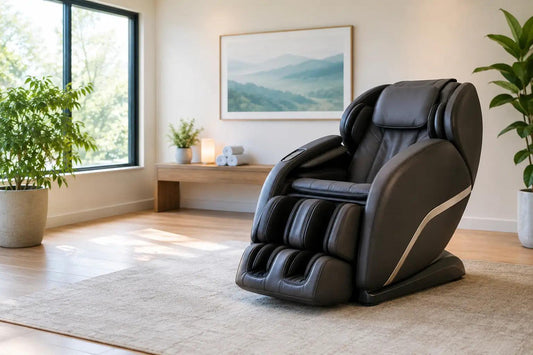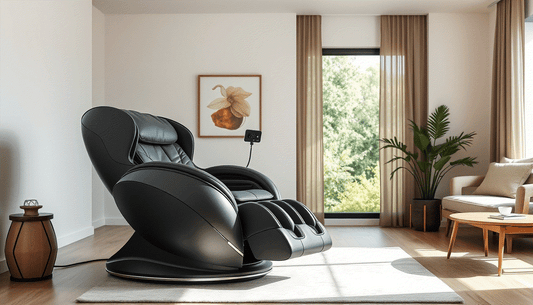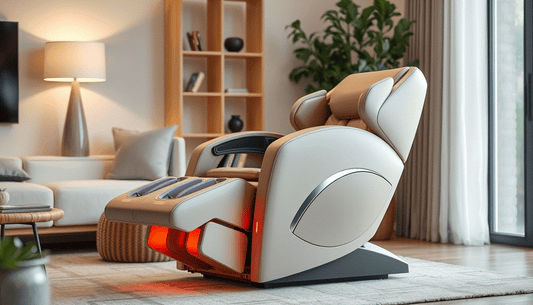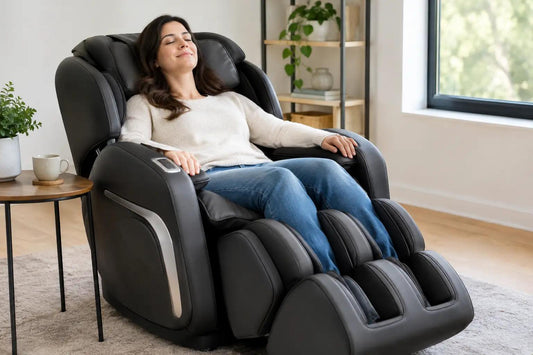
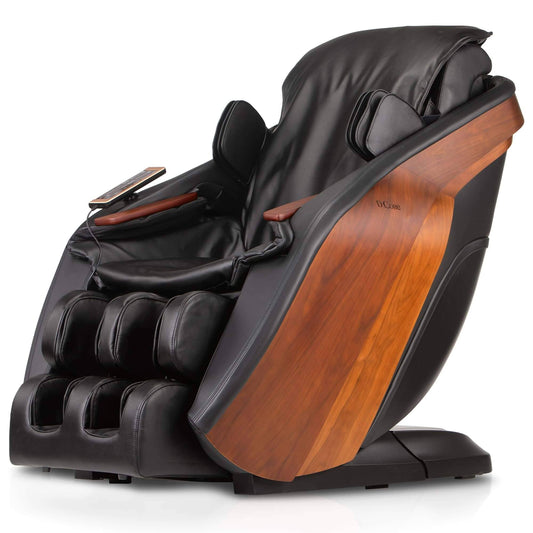

Japanese Chair Reviews for Premium Massage
A massage chair can look impressive in a showroom and still be the wrong chair for your body after a month at home. That is why Japanese chair reviews deserve a more discerning standard than a quick feature comparison. Premium buyers should look past the number of programs and ask a more useful question: does this chair deliver precise, repeatable comfort that suits your body, space, and recovery routine?
Japanese massage chair design has earned its reputation through careful attention to body mechanics, controlled massage movement, refined upholstery, and long-term usability. But Japanese heritage alone is not a guarantee that every chair will feel equally effective. The best purchase comes from matching the engineering to the experience you want.
What Japanese Chair Reviews Should Actually Evaluate
A credible review begins with massage performance, not decorative extras. A chair may offer heat, speakers, or an elaborate remote, but those features do not compensate for rollers that miss the shoulders or air cells that apply pressure unevenly. For professionals managing daily tension, active households prioritizing recovery, or older adults seeking dependable relief, the core mechanism remains the deciding factor.
Start with how the chair scans the body. Advanced body-scanning systems measure shoulder position and spinal contours before a session begins, helping the rollers follow a more appropriate path. This matters most when more than one person will use the chair. A fixed roller position may feel adequate for one user and noticeably off-target for another.
Then consider massage depth. A lighter chair can be excellent for relaxation and circulation, while a deeper mechanism is better suited to buyers who prefer focused work through the upper back, lumbar area, glutes, and calves. Neither is universally superior. Deep tissue performance can be exceptionally satisfying, but it may feel too intense for a user who is sensitive to pressure or recovering from a flare-up.
The Track System Changes the Experience
Track design is one of the most meaningful specifications in Japanese chair reviews because it defines where the massage can travel. An S-track follows the natural curve of the spine and is often a strong choice for focused back and neck sessions. An SL-track extends that pathway down toward the glutes and upper thighs, creating a more comprehensive seated massage.
For many premium buyers, an SL-track is the more versatile investment. The extended coverage is especially valuable after long workdays, extended travel, or demanding training sessions. Still, track length should not be treated as a simple scorecard. Roller quality, the chair's ability to maintain contact, and accurate body scanning have just as much influence on whether the lower-back and glute massage feels purposeful rather than generic.
Some advanced designs also use flexible frames or mechanisms that let the chair better adapt to body movement and reclining positions. This can create a more natural sensation, particularly during stretching programs. It is an elevated feature, but it should be judged by the result: consistent contact and comfort throughout the session.
4D and 5D Technology: What the Labels Mean
The jump from 3D to 4D and 5D massage is not merely a marketing upgrade when it is implemented well. Traditional roller systems move along the back and across it. 3D adds forward movement, allowing the rollers to reach farther into the muscles. A 4D system generally adds greater control over speed, rhythm, and depth, producing a massage that can feel less mechanical and more varied.
5D AI massage systems build on that concept through more responsive adjustment. Depending on the chair, this may involve monitoring body position, tension patterns, or session feedback to refine pressure and technique. The benefit is not that the chair replaces a trained therapist. It is that the massage can feel more personalized than a fixed program running at one unchanging intensity.
Buyers should remain practical here. A finely tuned 4D chair can be a better choice than a poorly calibrated system with a higher-numbered label. Review the available intensity settings, manual controls, targeted programs, and the degree to which the chair lets you adjust roller position. Advanced technology is most valuable when you can direct it.
Zero Gravity Is About More Than Reclining
Zero gravity positioning distributes weight more evenly and elevates the legs, helping the body settle into a low-pressure reclining posture. In a premium massage chair, this position often improves the relationship between your body and the rollers while making air compression around the legs and feet feel more effective.
For executives and homeowners who use a chair at the end of a demanding day, zero gravity can turn a short massage into a true decompression ritual. It is also useful for users who find upright massage positions fatiguing. However, measure your room before assuming any reclining chair will fit. Wall-hugging designs require less clearance behind the chair, but footrest extension and overall depth still need consideration.
Made in Japan vs. Japanese-Inspired Design
This distinction deserves clarity. Made in Japan massage chairs are manufactured in Japan and may reflect longstanding production standards, component selection, and quality-control practices associated with Japanese engineering. Japanese-designed or Japanese-inspired chairs may incorporate similar principles while being manufactured elsewhere.
Both categories can offer an excellent ownership experience. The difference should not be used as a shortcut around evaluating the actual chair. For an ultra-premium buyer, Made in Japan can carry meaningful value in craftsmanship, heritage, and perceived longevity. For a value-conscious premium shopper, a carefully selected chair from another manufacturing location may provide the precise features they want at a more attainable price.
The strongest reviews identify this distinction plainly rather than treating all Japanese-branded chairs as identical. Look for specific information on manufacturing origin, warranty coverage, service support, and the technologies built into the model.
Comfort Details That Matter After the First Week
Luxury is often felt in the details that do not make the largest headline. Foot rollers should be adjustable enough to accommodate different sensitivities. Calf massage should hold the legs securely without pinching. Heating should be placed where it supports relaxation, commonly around the lumbar region, rather than serving as a vague add-on.
Upholstery also deserves attention. Premium synthetic leather can be durable, easy to maintain, and visually appropriate for an executive office or refined living space. Yet the best material is not necessarily the softest at first touch. Consider breathability, ease of cleaning, how it will age in sunlight, and whether the chair's color and silhouette belong in the room where it will live.
Controls shape the daily experience as well. A touchscreen remote can make advanced programs easy to access, while physical buttons may be preferable for users who want immediate adjustments without navigating menus. If multiple people will use the chair, saved user preferences can be more valuable than a long list of preset routines.
How to Read Reviews Without Being Misled
The most helpful owner feedback describes a person's height, build, preferences, and how long they have used the chair. A review saying the shoulder massage was excellent has limited value without context. A reviewer who explains that they are tall, use the chair four times a week, prefer medium intensity, and noticed improved comfort after desk work provides much more actionable information.
Be cautious with reviews that focus only on delivery excitement or first-day impressions. Premium massage chairs are durable wellness purchases, and the better assessment emerges after repeated use. Pay attention to comments about roller accuracy, noise levels, ease of entering and exiting the chair, remote usability, and service experience. These are the details that affect ownership over years, not minutes.
It is also wise to separate comfort preference from product quality. One person may find firm calf compression invigorating; another may find it excessive. A negative comment is most useful when it tells you whether the chair is unsuitable for your preferences, rather than proving the chair is objectively poor.
Selecting the Right Level of Investment
A premium massage chair should be chosen by intended use, not just by price tier. An accessible model with zero gravity, reliable body scanning, and strong core massage may be ideal for a buyer seeking daily relaxation. A luxury 4D or 5D AI chair makes more sense for those who prioritize highly adjustable deep tissue work, refined programs, and executive-level finishes.
Refurbished inventory can be a compelling path for buyers who want advanced technology at a lower entry point, provided the chair has been professionally inspected and includes clear support terms. Fujiiryoki USA curates premium options across Japanese-engineered and luxury wellness categories, making it easier to compare the technologies that genuinely influence performance.
The right chair should feel less like a piece of exercise equipment and more like a dependable part of your home wellness routine. Choose the model whose massage mechanics, fit, and controls invite you to use it often - because consistent comfort is where a premium chair earns its place.
Tags:
Previous
Fujiiryoki Calm Plus: Whole-Body Back Pain Relief and Posture Alignment Through Targeted Deep Tissue, Shiatsu, and Reflexology at Home
Next
Fujiiryoki Calm Plus: Optimizing Ankle-to-Knee Mobility with Precision Deep Tissue, Shiatsu, and Reflexology