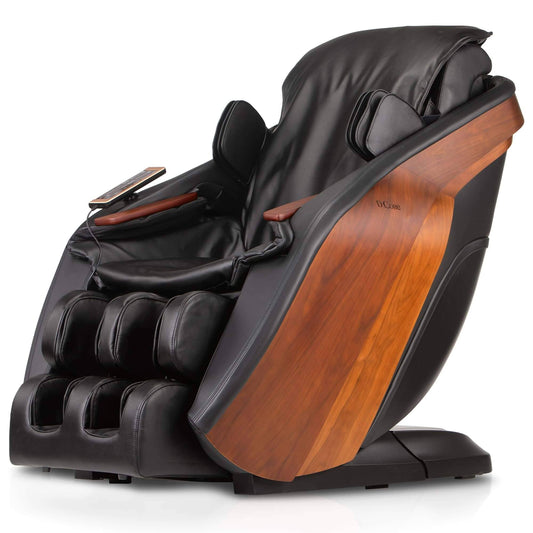

AI Massage Chair Reviews That Look Beyond Features
A premium massage chair can look extraordinary on a specification sheet. The meaningful difference appears when it begins a session: Does it find the shoulder line accurately? Does the pressure suit your body rather than an average body? Does the program change with purpose? The best AI massage chair reviews answer those questions, not just whether a chair has an AI label.
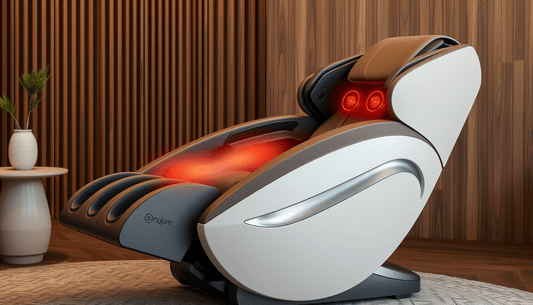
For a buyer investing in elevated at-home recovery, AI is not a novelty feature. At its best, it is the system that turns advanced mechanics - 4D or 5D rollers, an SL track, zero gravity positioning, heat, and air compression - into a massage that feels more deliberate from one session to the next. At its weakest, it can be little more than automated body scanning under a more sophisticated name.
What AI Means in a Massage Chair
AI massage technology is not standardized across the industry. One manufacturer may use the term for a body scan that maps shoulder height and back length before the massage begins. Another may use sensors and programming that monitor muscle firmness, posture, pulse, or user feedback and then adjust roller depth, speed, technique, and program flow during the session.
That distinction matters. Every premium chair should locate the body with reasonable accuracy. True AI-oriented performance goes further by using that initial reading to personalize the massage rather than simply selecting a preset routine. The chair may slow around sensitive areas, increase work through the lumbar region, vary kneading and tapping patterns, or make more intelligent use of its available intensity range.
Buyers should also separate AI from the hardware it controls. AI does not make shallow rollers suddenly feel like deep-tissue rollers, and it cannot compensate for a track that does not fit your height or a chair whose shoulder width is too narrow. It is an intelligent layer over the chair's mechanical design. The strongest results come from advanced software paired with exceptional engineering.
How to Read AI Massage Chair Reviews
A useful review should describe the experience in physical terms. Statements such as “smart,” “adaptive,” and “personalized” are promising only when the reviewer explains what changed and whether the adjustment improved comfort or therapeutic feel.
Look for body-scan accuracy
The first test is simple: does the chair consistently identify the neck, shoulders, and back? A scanner that places rollers too high can create pressure at the base of the neck. One that stops short of the shoulders may leave the upper back underworked. Look for reviews that mention several users or repeat sessions, especially if household members differ in height and build.
Manual adjustment remains valuable even in an AI-equipped model. The most refined chairs allow the user to fine-tune roller position, width, and intensity after scanning. Automation should save time, not take control away from you.
Pay attention to how pressure changes
A high-end AI system should not treat intensity as a single on-or-off setting. Roller depth, massage speed, width, rhythm, airbag pressure, and heat all influence how forceful a session feels. A thoughtful review will explain whether the chair made useful adjustments in tight areas without becoming overly aggressive elsewhere.
This is especially relevant for shoppers considering 4D and 5D massage chairs. The added dimension generally refers to more control over roller speed, depth, and movement. AI can use that flexibility more effectively, but the results depend on the chair’s programming. Deep tissue performance is desirable for many users, yet a chair that always pursues maximum pressure can become difficult to use regularly.
Distinguish adaptive programs from manual control
Automatic programs offer convenience, particularly after a long workday when choosing techniques and settings is the last thing you want to do. Still, reviews should clarify whether the chair offers enough manual control for different needs. A recovery session, a gentle evening program, and a focused upper-back routine should not feel interchangeable.
The strongest premium designs combine both approaches. They offer guided AI programs for easy daily use while preserving dedicated controls for intensity, massage region, roller speed, air compression, heat, and recline. That balance gives the chair a longer useful life in the home.
The Hardware Behind a Convincing AI Experience
AI performance is inseparable from chair design. Before giving too much weight to software claims, assess the systems the chair is actually controlling.
An SL track allows rollers to travel from the upper back through the lumbar region and beneath the glutes. For many users, that extended coverage is central to the feeling of a complete massage. A shorter track may still be appropriate for compact spaces or lighter-use applications, but it limits what even an excellent adaptive program can reach.
Zero gravity positioning changes the relationship between the body and the rollers by reclining the chair into a pressure-relieving posture with the legs elevated. In this position, many users experience more even contact through the back and a deeper sense of release. AI can tailor the massage, but zero gravity often determines whether the body can settle into it.
Roller construction also deserves close attention. Premium 4D and 5D systems can modulate depth and pace with greater subtlety than basic fixed-pattern rollers. Flex-frame and advanced body-conforming designs may further improve contact through the spine and shoulders. Heated functions, calf and foot massage, and sophisticated air cells can add to the experience, though they should support the core massage rather than distract from it.
AI Massage Chair Reviews: Common Trade-Offs
The most capable AI massage chairs are rarely the simplest to evaluate. More sensors, programs, motors, and adjustment options can produce a remarkably tailored session, but they also make setup and preference learning more important. Some users want a chair that starts with one touch. Others appreciate a touchscreen remote and the ability to refine every detail. Neither preference is wrong.
Size is another practical trade-off. Ultra-premium chairs with extended tracks, advanced calf modules, and deeper recline demand more room than a conventional recliner. Measure the intended space, including wall clearance and the chair’s fully reclined footprint. A chair can be technically impressive and still be the wrong choice if it overwhelms an executive office, bedroom, or living area.
There is also a difference between intensity and quality. A less expensive chair may advertise strong pressure, while a Made in Japan model may feel more controlled, precise, and repeatable. For buyers who will use a chair several times a week, nuanced pressure adjustment often matters more than a single dramatic deep-tissue session.
Finally, consider who will use it. A chair shared by a couple or family benefits greatly from accurate scanning, saved user preferences, and broad adjustability. A chair intended for one person may justify a more specialized fit and a simpler control experience. For commercial relaxation spaces, durability, session management, upholstery quality, and ease of operation become equally important.
Questions Worth Asking Before You Buy
Rather than asking whether a chair “has AI,” ask how the technology behaves in use. Does the system scan each session? Can you adjust the scan if it misses your shoulder position? Does it respond to muscle tension or only select a preset based on basic body measurements? Are the AI programs meaningfully different from the standard automatic programs?
It is also wise to ask whether the chair’s fundamentals match your priorities. If lower-back and glute coverage are essential, prioritize the track and roller reach. If you prefer a firmer massage, look for adjustable roller depth and reviews from users who describe deep-tissue performance. If relaxation is the primary goal, zero gravity, heat, quiet operation, and refined air compression may be more valuable than maximum roller force.
A premium retailer such as Fujiiryoki USA can be particularly helpful when comparing these categories because the decision is rarely about one feature. The right chair is the one whose engineering, fit, massage style, and control system align with how you expect to use it.
The Better Standard for an AI Chair
A luxury massage chair should feel intelligent without making you think about the technology. You should notice that the rollers arrive where they should, the pressure feels considered, and the program evolves naturally as your body relaxes. That is a better standard than a long list of sensors or an impressive-sounding program name.
When reading reviews, give the most weight to repeated real-world details: accurate scanning, comfortable pressure control, reliable coverage, quiet operation, and a massage you want to return to. Those are the qualities that turn advanced AI from a headline feature into a worthwhile part of your daily wellness routine.
Tags:
Previous
Fujiiryoki Cyber Relax AI: Neck & Shoulder Pain Relief with Targeted Trigger Point, Acupressure & Shiatsu for Enhanced Circulation
Next
Fujiiryoki Calm Plus: Alleviate Back Pain and Improve Posture at Home with Deep Tissue and Shiatsu Massage